Research activities
CBCE aims for a holistic understanding of the functioning of tropical ecosystems in the Congo basin by integrating expertise from various scientific fields. CBCE focuses predominantly on ecosystem functioning, and its recovery after disturbance through in-situ field observations, biogeochemical research measurements of greenhouse gas fluxes and atmospheric composition, remote sensing, and process-based modelling. Land use dynamics, climate change and alterations of nutrient cycles are of particular interest as major drivers of ecosystem change in the region. CBCE studies these processes in a diverse set of ecosystems, ranging from tropical forests (pristine and secondary forests), wetlands, savannahs, woodlands, and a range of food production systems, including cacao, cassava and coffee production(agroforestry) systems.
Field Observations
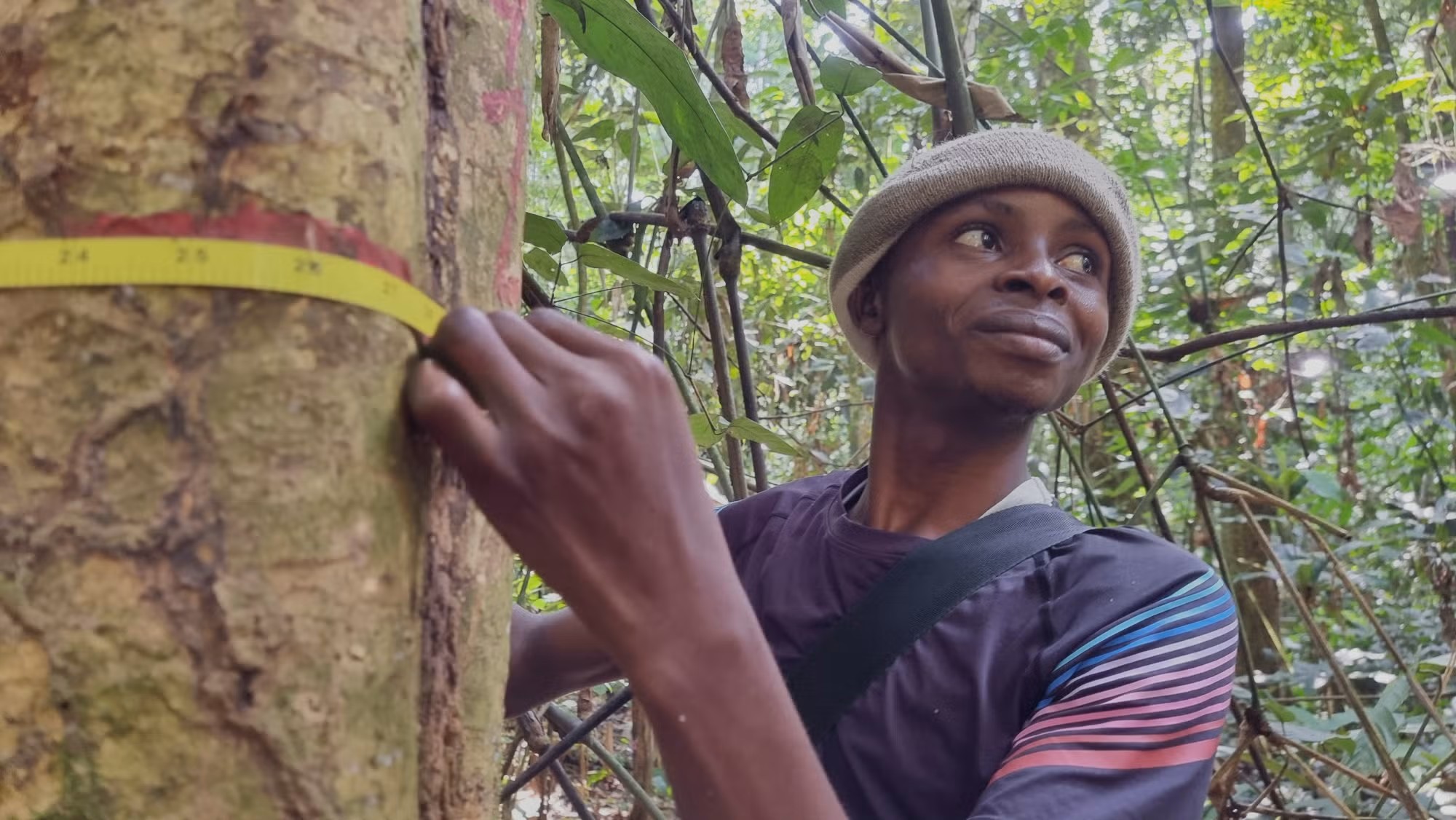
In situ data can be considered the foundation of all ecosystem research in the region, because without ground truthing, broader-scale assessments lose accuracy. To gather these data, CBCE establishes networks of long-term vegetation plots across the Congo basin to monitor plant biodiversity, functional composition and forest growth, and its dynamics over time. These in-situ observations include forest inventories (using terrestrial laser scanners, but also conventional botanical surveys), plant trait analyses, photosynthesis and respiration measurements, ecosystem productivity measurements (e.g. fine root growth and litter fall), and charcoal analyses to reconstruct species composition in the past and historical disturbance regimes. These direct measurements are essential to capture baseline ecological conditions, and to assess how ecosystems respond to change. These data are also crucial for validating remote sensing products and model simulations.
Biogeochemical cycles
Measuring nutrient cycles is vital for understanding the sustainability of tropical ecosystem functioning over time, and can help to define specific threats (e.g. related to nutrient losses or excessive (atmospheric) nutrient inputs) but also nutrient requirements (e.g. in agricultural settings) to sustain ecosystem functioning over time. Nutrient cycles, being defined by inputs through soil weathering and atmospheric deposition, internal cycling within the vegetation, and losses via leaching, lateral export and gaseous emissions, are being measured using a wide array of measurement techniques. CBCE mainly focuses on chemical and isotope analyses of soil samples, throughfall water samples and water that percolates into deeper soil layers. Chemical analyses focus on measuring elemental composition, but also stable isotopes to trace the fate of various nutrients within the studied systems.
Greenhouse gas and other atmospheric measurements
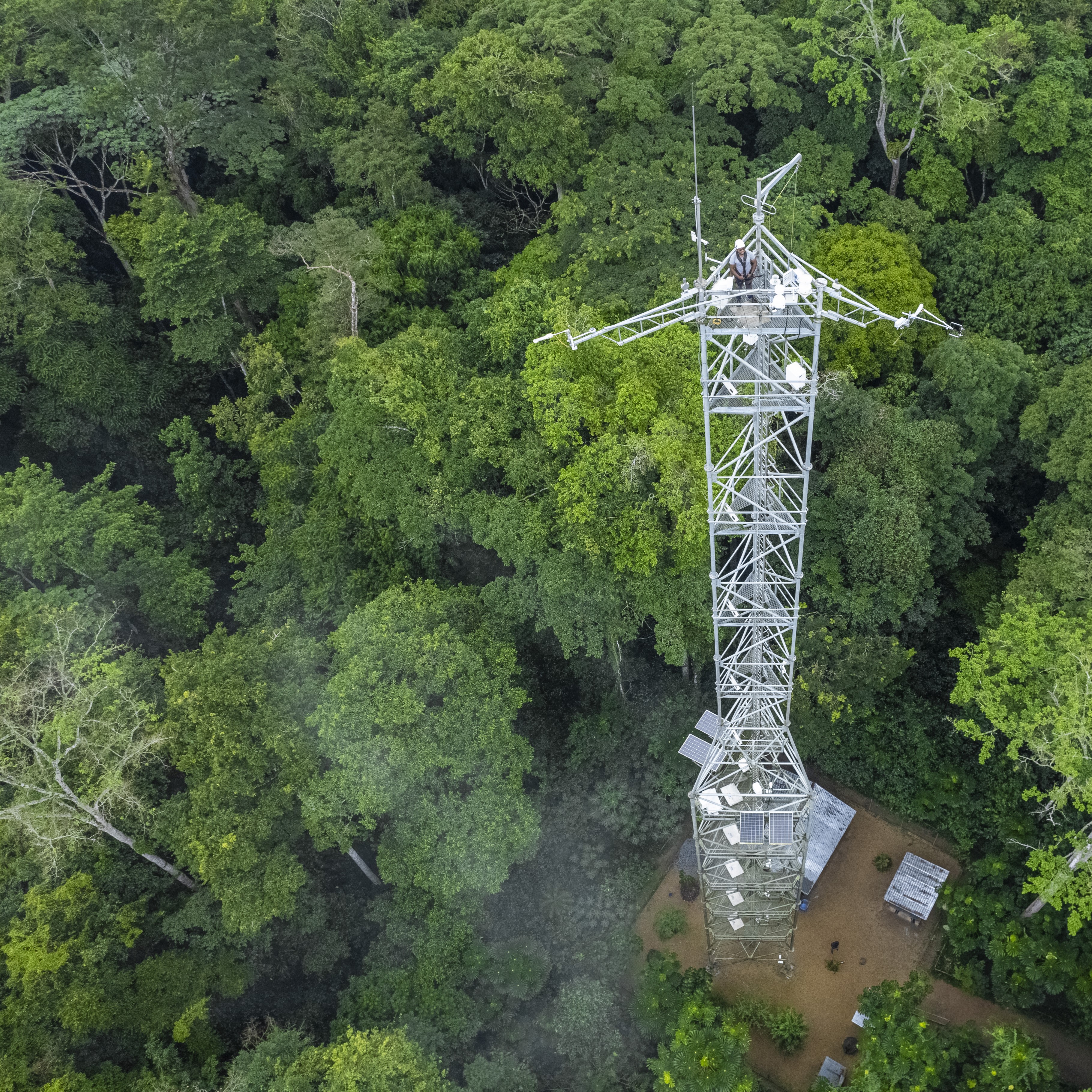
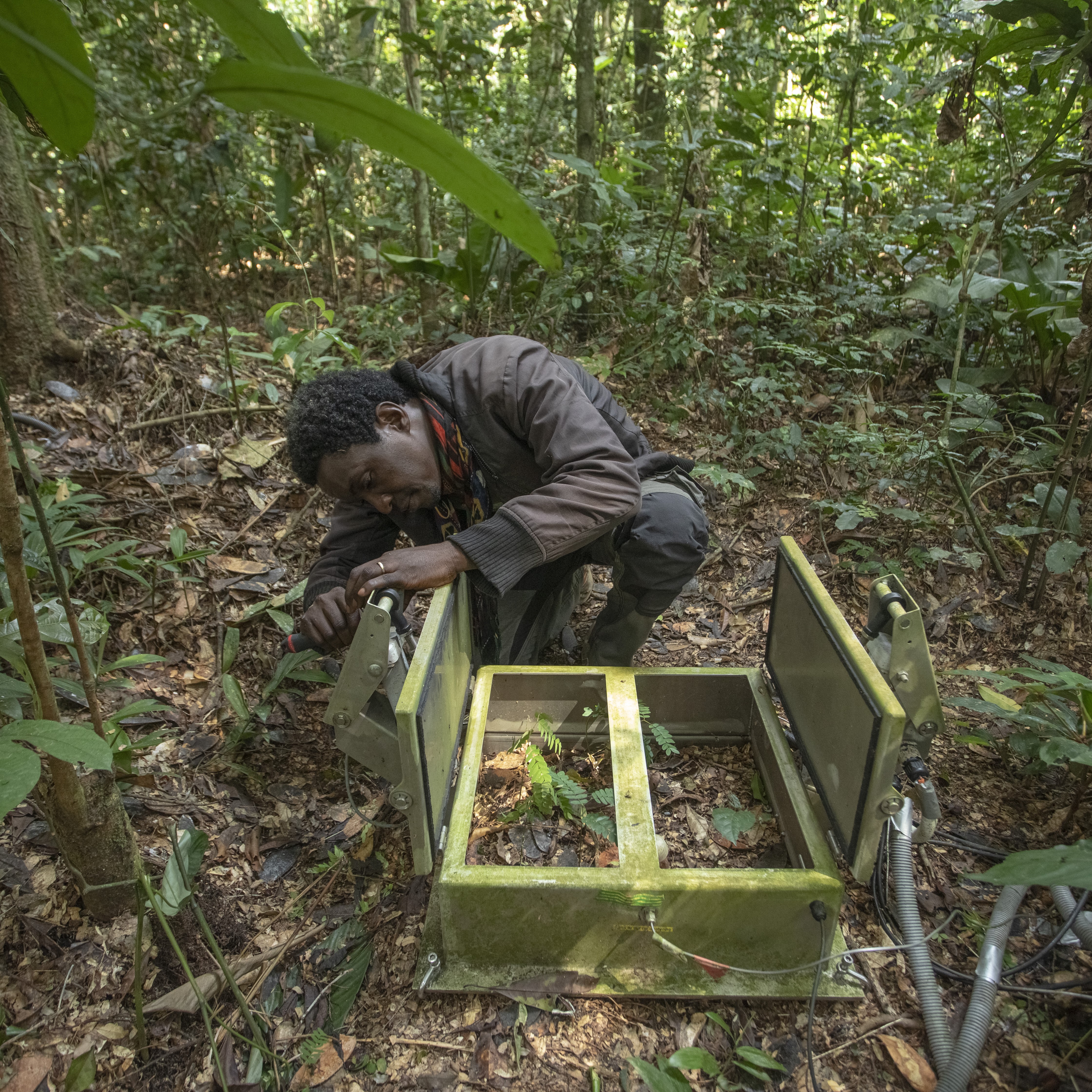
Measuring the exchange of greenhouse gases between tropical ecosystems and the atmosphere is essential to understand the role of tropical systems in global climate regulation, but is also needed to fully quantify nutrient and carbon budgets of these systems. CBCE measures the exchange of greenhouse gases between the soil, the vegetation and the atmosphere, via local measurements with portable devices (e.g. to measure emissions from the soil and from the stems of individual trees) but also at the stand-scale, on top of the CongoFlux eddy covariance tower, installed in the Yangambi biosphere reserve. This tower with a height of 57 m measures the exhange of greenhouse gases between a pristine tropical forest and the atmosphere and monitors an array of climate variables and the chemical composition of the above-canopy air layers. Within CBCE, these data are mainly used to benchmark field-based forest carbon sink estimates, and to constrain process-based model simulations of forest growth.
Remote sensing and process-based modelling
Remote sensing and proces-based modelling are indispensable for scaling up field data across the Congo basin. Satellite and airborne remote sensing allow us to map vegetation structure, composition and productivity and monitor ecological changes such as land use change and forest degradation over vast, often inaccessible areas. Through ecological models and machine learning, we integrate field data, flux tower data, and remote sensing data into predictive tools. These models allow us to simulate carbon, nutrient and water cycling within tropical ecosystems, and their dependence on past disturbances and climate change. These models are also essential to understand the future of the Congo Basin in a changing climate and to inform strategies for conservation, restoration, and sustainable land management across the Congo basin.
Capacity Building
At the CBCE, we consider collaboration as an essential pillar of our research activities. We co-design and supervise research projects with local universities and institutions in Central Africa to strengthen scientific expertise within the Congo Basin. Through long-term partnerships, shared infrastructure and research projects, and knowledge exchange, we aim to empower local researchers, students, and technical staff to lead and sustain locally anchored, impactful research.
Capacity building activities
CBCE’s main capacity-building activities include:
PhD training and academic supervision: SSupport and co-supervision of local PhD candidates enrolled at local research institutes, at Ghent University, or at other partner institutions. More than half of the PhD candidates conducting research in the Congo Basin under our (co-)supervision are students from the region itself, particularly from the Democratic Republic of the Congo and Uganda.
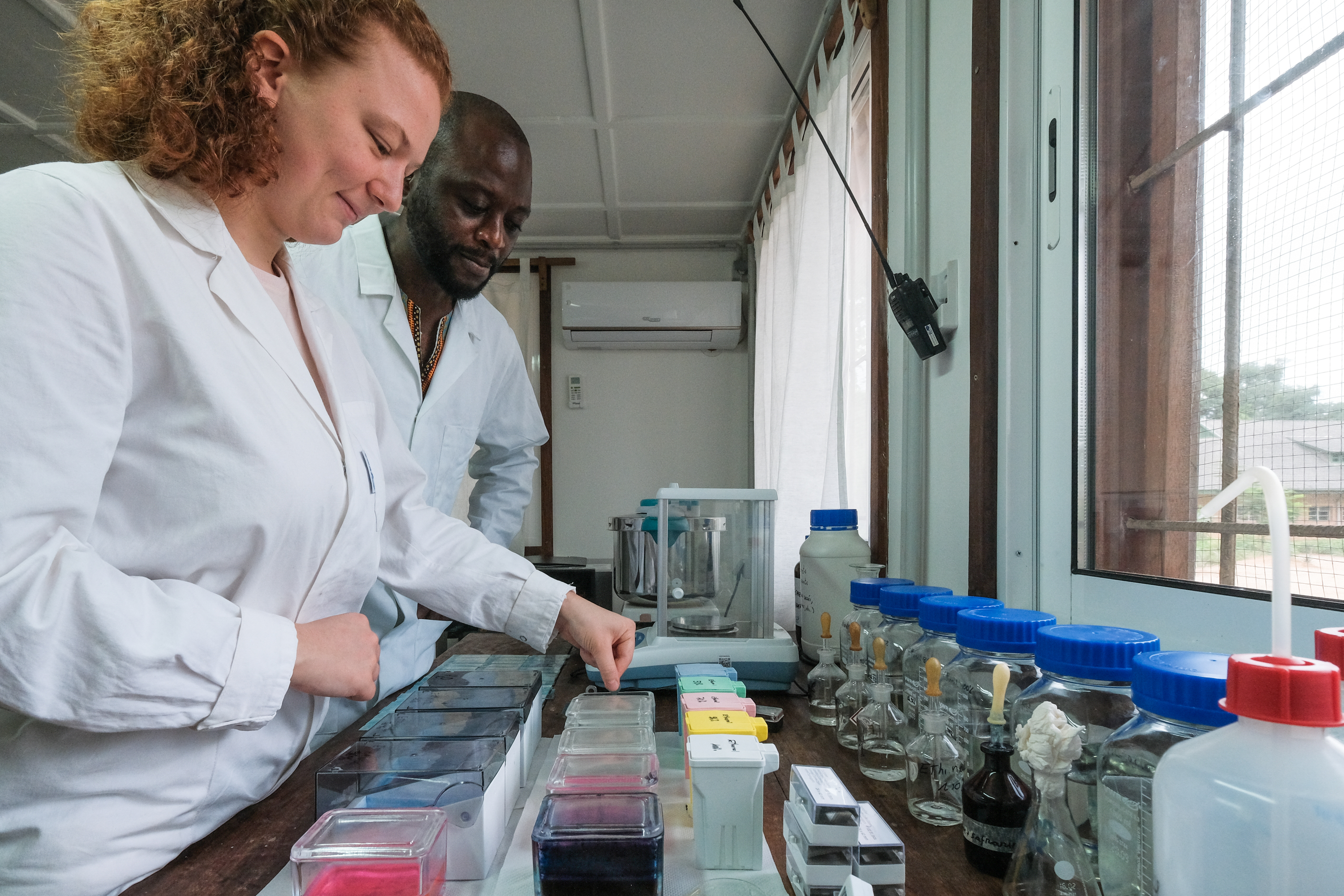
Scientific training for staff and students: Practical training in field techniques, laboratory analysis, data management, and ecological monitoring for local researchers, master students, and technicians.
Establishment of local scientific teams: Development of dedicated research teams, such as the CongoFlux monitoring team, multiple forest inventory teams that are trained by local botanists and UGent researchers, and a local team of researchers that run the wood biology lab of Yangambi.Currently, most of our technical staff come from and stays in the Democratic Republic of the Congo.
Institutional collaboration and expertise exchange: Joint research initiatives with local universities and institutes, that invest in shared research infrastructure and mutual learning.